 Technical Insights
2026-05-19
Technical Insights
2026-05-19
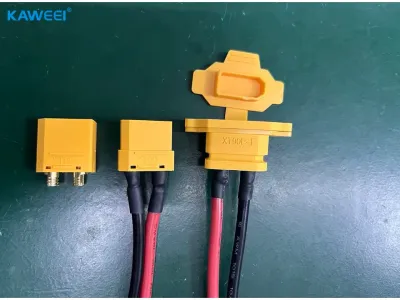
XT90 Connector Harness: Engineering Tips for Better Performance
I recently finished a batch of custom XT90 female connector harnesses for a client. In our shop at Kaweei, we deal with power connectors every single day. While the XT90 is a standard for high-current applications, I’ve seen countless projects suffer from "mysterious" power drops or overheating issues.
 Technical Insights
2026-05-09
Technical Insights
2026-05-09
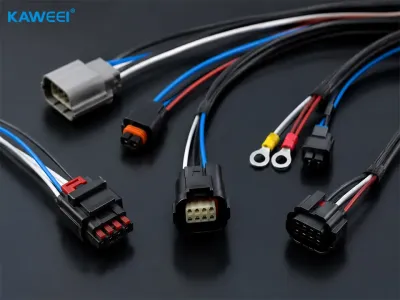
What Is a Pigtail Connector? Types, Wiring & Applications Guide
Pigtail connectors are widely used in automotive wiring, industrial equipment, LED lighting, and electrical repair applications. They provide a reliable and efficient way to connect electrical circuits while simplifying installation and maintenance.
 Technical Insights
2026-04-11
Technical Insights
2026-04-11
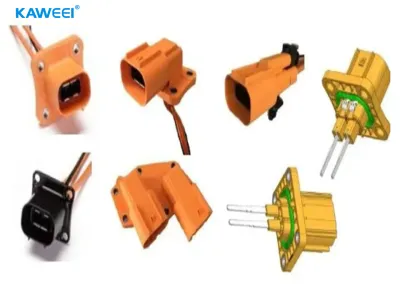
Analysis of Reliability and Electrical Performance of Wire Harness Connectors
In the electrical and electronics fields, connectors are the core to ensuring stable system operation. The application of high-performance copper alloys covers almost all electrical and electronic connectors and interconnect devices. For the wire harness industry, connectors must provide reliable mechanical and electrical connections between two components of an electronic system, without causing unacceptable signal distortion or power loss.
 Technical Insights
2026-03-17
Technical Insights
2026-03-17
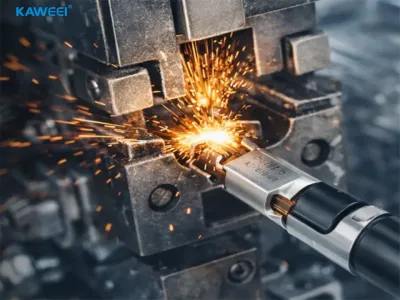
Why is the Terminal Crimp Height Tolerance Only ±0.03 mm?
In the electronics manufacturing and wire harness processing industry, whether referring to the globally recognized IPC/WHMA-A-620 standard (Requirements and Acceptance for Cable and Wire Harness Assemblies) or the USCAR-21 standard, there is a core parameter that every wire harness process engineer must strictly adhere to: the tolerance of terminal Crimp Height, which is typically locked firmly at ±0.03 mm.
 Technical Insights
2026-02-06
Technical Insights
2026-02-06
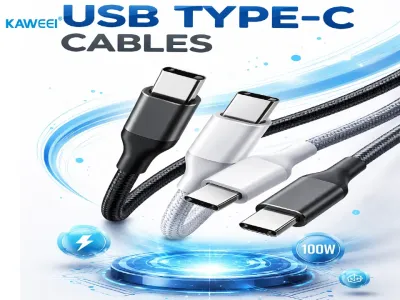
USB Type-C Wire Harness Design: 1.2 Specification Analysis & Manufacturing Craftsmanship
The first impact of Type-C is physical. The specification clearly states the receptacle height is under 3mm, which means tolerance control in **Connector Termination and Over-molding** must be extremely rigorous.
 Technical Insights
2026-01-24
Technical Insights
2026-01-24
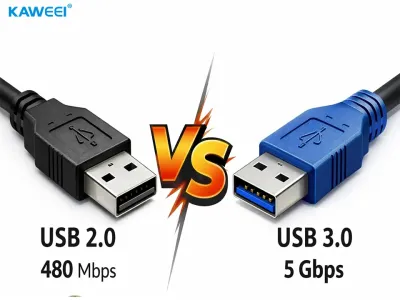
USB 2.0 vs USB 3.0 Differences: Wiring, Pinout, and Function (A Harness Engineer's Guide)
Why are USB 3.0 cables usually thicker and stiffer? Because their internal wiring has expanded from 4 cores to 9 cores, adding dedicated Shielded Differential Pairs (SDP). In this article, from the professional perspective of wire harness manufacturing and design, I will deconstruct the core differences between USB 3.0 and 2.0 in physical appearance, pinout definitions, and functional roles, helping you understand the engineering secrets behind the blue connector.
Trending News
-

IPC-620 Wire Harness Processing Standard: How Does Kaweei Ensure Every Wire Meets the Specification?
2025-03-11
-

Difference between OEM and ODM
2025-03-20
-
What is Wire Harness Design?
2025-08-27
-

Kaweei High-Speed Data (HSD) Connectors for Automotive and Industrial Applications
2024-12-27
-

High voltage cable assemblies for electric vehicles
2025-03-03